Yesterday’s post was all about hard-to-find beers that should not be missed at the Oregon Brewer’s Festival. Some folks head to the OBF with specific goals in mind – to taste all of the porters, for example, or all of the high-alcohol beers.
This blog post is intended to help some of those drinkers. But only those who think – and drink – like me. I like thirst-quenching beers, organics, and beers I can't find elsewhere.
So, without further ado, here are a couple of handy checklists. If you think of other sorts, suggest them and I'll see what I can do.
Here are the hoppiest ten beers on tap at the festival (for the jargon-challenged, IBU is “International Bitterness Units” and measures the bitterness of a beer; OG is “original gravity”, roughly the beer’s malt content before fermentation):
Brewery Beer Name Beer Style IBU OG
Laughing Dog Brewing Alphadog Dog Imperial IPA Imperial IPA 127 1.070
Old Market Pub The Kraken Imperial IPA Imperial IPA 103 1.080
Green Flash Brewing Co Green Flash Imperial IPA Imperial IPA 101 1.080
Beer Valley Brewing Co Leafer Madness Imperial Pale Double IPA 100 19P
Astoria Brewing Co Bitter Bitch Imperial IPA 99 1.080
Track Town Ales 200 Meter IPA 90 16P
Standing Stone Brewing Co Double India Pale Ale Double IPA 80 18.7P
Rock Bottom Brewery Eat a Bale o' Hops IPA IPA 80 15.5P
Stone Brewing Co Cali-Belgique IPA Belgian IPA 77 n/a
Terminal Gravity Festivale British Strong 73 17.5P
These are the most alcoholic (that provided this information) (ABV = Alcohol by Volume):
Brewery Beer Name Beer Style IBU OG
Redhook Ale Brewery Belgian Tripel Belgian Tripel 20.50 10.3
Pike Brewing Co Monk's Uncle Belgium Tripel 1.08 9.0
Widmer Bros. Brewing Co KGB Imperial Stout 21.00 9.0
Green Flash Brewing Co Green Flash Imperial IPA Imperial IPA 1.08 9.0
Beer Valley Brewing Co Leafer Madness Imperial Pale Double IPA 19.00 9.0
Old Market Pub The Kraken Imperial IPA Imperial IPA 1.08 8.9
Scuttlebutt Brewing Co Tripel 7 Belgian Style Ale Belgian Tripel 19.00 8.9
Astoria Brewing Co Bitter Bitch Imperial IPA 1.08 8.7
Terminal Gravity Festivale Strong Ale 17.50 8.3
Laughing Dog Brewing Alphadog Dog Imperial IPA Imperial IPA 1.07 8.0
Boulevard Brewing Co Tank 7 Farmhouse Ale Farmhouse Ale 17.50 8.0
And the lowest in alcohol, for those who prefer to sip and savor without getting loaded:
Brewery Beer Name Beer Style IBU ABV
Eel River Brewing Organic Acai Berry Wheat Fruit Beer 15 40
Cascade Lakes Blonde Bombshell Blonde Ale 26 4.0
Caldera Brewing Co Hibiscus Ginger Beer Ginger Beer na 4.3
North Coast Brewing Co Scrimshaw Pilsner 22 4.4
Southern Oregon Brewing SOB Gold Hybrid 20 4.5
Oregon Trail Brewery Oregon Trail Wit Wit 28 4.5
Dogfish Head Festina Peche Berliner Weisse 8 4.5
Cascade Brewing at the Raccoon Lodge Razberry Wheat Fruit Beer 15 4.5
Three Creeks Brewing Co Stonefly Rye Rye Ale 28 4.6
10 Barrel Brewing Co Summer Ale Golden 4.7
Moylan's Brewing Co Pomegranate Wheat Wheat Ale 8 4.8
Lost Coast Brewery Great White Belgian Witbier 11 4.8
Deschutes Brewery Miss Spelt Specialty 30 4.8
Trumer Brauerei Trumer Pils Pilsner 26 4.9
Laht Neppur Brewing Co Neddy's Brown Nut Nut Brown na 4.9
Here are the organic beers:
Brewery Beer Name Beer Style OG ABV
Alameda Brewing Co. El Torero American IPA 1.070 na
Bison Brewing Co Organic Chocolate Stout Foreign Style Stout 1.070 36
Double Mountain Brewery India Red Ale ("IRA") India Red Ale 1.060 65
Eel River Brewing Organic Acai Berry Wheat Fruit Beer 9.0P 15
Fish Brewing Co Organic Wild Salmon Pale Ale Pale Ale 1.050 32
Hopworks Urban Brewery Organic Rise Up Red NW Red Ale 13.5P 60
Standing Stone Brewing Double India Pale Ale Double IPA 18.7P 80
Tuesday, July 21, 2009


Monday, July 20, 2009
12 beers not to miss at the 2009 OBF
The 2009 Oregon Brewer’s Festival begins Thursday at noon (10 AM for those attending the Brewer’s Breakfast, and Wednesday at 6 for Brewer’s Dinner-goers), and Oregon’s summer weather is cooperating by giving us a real beer-drinker’s forecast. I suspect I’ll be as thirsty as I need to be once those taps open.
The thing is, no matter how many hours I spend at the Festival, I never hit all of the taps. This year, with 81 beers flowing in addition to the 20 or so poured in the extra-charge “Buzz Tent”, the likelihood of hitting them all is even more remote. The best we can hope for is to try the ones we’re unlikely to find on Portland’s nearly infinite supply of taps in its rich supply of awesome neighborhood pubs.
Thus, it’s good to have a game plan in mind before you wet your whistle. Rather than numbing my taste buds with four ounces of each brew, I prefer to taste strategically. I look for:
- New beers from consistently good breweries. If the places that brew up my favorites are brewing up something new, I know I can expect a quality taster from them at the fest.
- Beers from new OBF participants. The OBF staff works hard to mix up the line-up of breweries and to balance local with long-distance contributors.
- Experimental beers – within limits. I want to know what spelt beer is like, but I also know what I don’t like (sour beers, fruit beers, and really really light lagers). Selective support of experimentation keeps your taste buds fresh, especially after taking a beating from all of those 100-IBU IPA’s.
- Thirst-quenchers. When all is said and done, the OBF is a hot, dusty place. Crisp, hoppy beers go down well.
Luckily, for the past three years I’ve had the good fortune of getting to know the OBF beers in advance by writing the descriptions for the program. Unfortunately, I don’t get to taste them all before writing about them, odd as that may seem. The ones that are special to the OBF or that are being shipped from the east coast, for example, simply aren’t available, so I go by what the brewer tells me.
Based on that information, here are the top dozen beers I want to make sure I don’t miss at this year’s OBF:
Deschutes Brewing “Miss Spelt” – a great brewery and a unique, special-to-the-fest formulation. It might well be my first stop on the tour.
Eel River Organic Acai Berry Wheat – I know, I said no fruit beers, but this one is truly original, and Acai berries are good for you, right? And it’s organic.
Elysian Loser Pale Ale – Elysian is introducing the Sorachi Ace hop, grown in Yakima from Japanese stock. I’m curious.
Firestone Walker Union Jack IPA – A new brewery from a long-established California company, I want to see what they’ve got.
Laht Neppur Neddy’s Brown Nut – Another newcomer just three years onto the scene, and brave enough to bring a dark ale to an IPA-crazy event.
Kona Kailua Kona Coconut Brown Ale - Sounds sweet and mellow, perfect for when the sun goes down and the air gets just a touch chilly.
Marin Brewing Bluebeery Ale – Once again violating my fruit beer rule (what are rules for, anyway?), I want to see if their attempt at using blueberries in an ale works any better than mine.
Moylan’s Pomegranate Wheat – Okay, shut up about the fruit thing, okay? Come on, it’s pomegranate. I have to know. Don’t you?
Rogue Latona Pale Ale – It’s a one-hop, one-malt brew. Crazy. It might be one-dimensional, and it might knock my socks off. Let me at it. Besides, Rogue always rocks.
Three Creeks Stonefly Rye – One of Oregon’s newest breweries, with Dave Fleming (formerly of the Lucky Lab) at the helm of the brewery, how can we go wrong?
Vertigo Razz Wheat – Another Oregon newbie, which once again makes me violate my no-fruit rule. Besides, Oregon raspberries are awesome, and I’m sure my girlfriend will finish this one for me if I don’t like it.
Widmer KGB Russian Imperial Stout – you can only get this one at the Gasthaus, and I don’t get there often enough. And it’s just. Incredible. Beer.
There you go – my first 12 stops. What are yours? (Check oregonbrewfest.com or www.guestontap.com for a complete list with descriptions.)
The thing is, no matter how many hours I spend at the Festival, I never hit all of the taps. This year, with 81 beers flowing in addition to the 20 or so poured in the extra-charge “Buzz Tent”, the likelihood of hitting them all is even more remote. The best we can hope for is to try the ones we’re unlikely to find on Portland’s nearly infinite supply of taps in its rich supply of awesome neighborhood pubs.
Thus, it’s good to have a game plan in mind before you wet your whistle. Rather than numbing my taste buds with four ounces of each brew, I prefer to taste strategically. I look for:
- New beers from consistently good breweries. If the places that brew up my favorites are brewing up something new, I know I can expect a quality taster from them at the fest.
- Beers from new OBF participants. The OBF staff works hard to mix up the line-up of breweries and to balance local with long-distance contributors.
- Experimental beers – within limits. I want to know what spelt beer is like, but I also know what I don’t like (sour beers, fruit beers, and really really light lagers). Selective support of experimentation keeps your taste buds fresh, especially after taking a beating from all of those 100-IBU IPA’s.
- Thirst-quenchers. When all is said and done, the OBF is a hot, dusty place. Crisp, hoppy beers go down well.
Luckily, for the past three years I’ve had the good fortune of getting to know the OBF beers in advance by writing the descriptions for the program. Unfortunately, I don’t get to taste them all before writing about them, odd as that may seem. The ones that are special to the OBF or that are being shipped from the east coast, for example, simply aren’t available, so I go by what the brewer tells me.
Based on that information, here are the top dozen beers I want to make sure I don’t miss at this year’s OBF:
Deschutes Brewing “Miss Spelt” – a great brewery and a unique, special-to-the-fest formulation. It might well be my first stop on the tour.
Eel River Organic Acai Berry Wheat – I know, I said no fruit beers, but this one is truly original, and Acai berries are good for you, right? And it’s organic.
Elysian Loser Pale Ale – Elysian is introducing the Sorachi Ace hop, grown in Yakima from Japanese stock. I’m curious.
Firestone Walker Union Jack IPA – A new brewery from a long-established California company, I want to see what they’ve got.
Laht Neppur Neddy’s Brown Nut – Another newcomer just three years onto the scene, and brave enough to bring a dark ale to an IPA-crazy event.
Kona Kailua Kona Coconut Brown Ale - Sounds sweet and mellow, perfect for when the sun goes down and the air gets just a touch chilly.
Marin Brewing Bluebeery Ale – Once again violating my fruit beer rule (what are rules for, anyway?), I want to see if their attempt at using blueberries in an ale works any better than mine.
Moylan’s Pomegranate Wheat – Okay, shut up about the fruit thing, okay? Come on, it’s pomegranate. I have to know. Don’t you?
Rogue Latona Pale Ale – It’s a one-hop, one-malt brew. Crazy. It might be one-dimensional, and it might knock my socks off. Let me at it. Besides, Rogue always rocks.
Three Creeks Stonefly Rye – One of Oregon’s newest breweries, with Dave Fleming (formerly of the Lucky Lab) at the helm of the brewery, how can we go wrong?
Vertigo Razz Wheat – Another Oregon newbie, which once again makes me violate my no-fruit rule. Besides, Oregon raspberries are awesome, and I’m sure my girlfriend will finish this one for me if I don’t like it.
Widmer KGB Russian Imperial Stout – you can only get this one at the Gasthaus, and I don’t get there often enough. And it’s just. Incredible. Beer.
There you go – my first 12 stops. What are yours? (Check oregonbrewfest.com or www.guestontap.com for a complete list with descriptions.)
Thursday, July 24, 2008
Happy to be in Beervana
It’s Oregon Beer Week, and that makes it an amazing time to be in Portland.
It began with an event I missed - the Portland International Beer Festival – due to bad planning, bad luck, and excessive fiscal prudence. But there are gobs of other events, including Meet the Brewer events at the Green Dragon, hospitality parties, Fred Eckhardt’s Beer and Cheese tasting, and no end of other options. This is not Beervana for nothing.
But my focus is on the main event – the Oregon Brewer’s Festival, starting today at noon at Portland’s Waterfront Park, and several of its satellite warm-ups.
The first of those events was last night, at the sold-out Brewer’s Dinner, a fancy name for a gigantic picnic with some 25-odd kegs of beer flowing through the capable hands of several dozen happy, well-fed volunteers. The salmon was, once again, absolutely outstanding. Not only that, but for the first time in over ten years of participating in this event, I finished off all of the scrip that comes with admission.
Of course, that’s because they reduced the number of half-pints you can get down from eight to six, and I had to rush to get my last one in. I finished with the sublime Bourbon-barrel Stout from Old Market Pub, a wonderful surprise from a place that usually hasn’t impressed me with their beer. It fit right in with the wide array of strong, full-flavored, full-bodied ales and a handful of lagers from which we had to choose.
Today, events begin early, with the Brewer’s Breakfast at 9 AM at the Rogue Ale House, the Brewer’s Parade from there to the festival, the ceremonial firkin-tapping at noon to open the festival, and the media tour for VIPs at 12:30. (Somehow I qualified. I’m not arguing the point.) The festival (for those of you who just emerged from under a rock) runs 12-9 thru Saturday and 12-7 on Sunday, as the kegs (it is hoped) run dry early that day.
I’ve been asked whether I sensed a theme at this year’s OBF, and I do. It’s Wit, both for the clever names and outrageous concoctions being presented, and for the prevalence of Wits and other wheat beers at the fest. (I wrote the program, so I have advance information: there are five Belgian Wits and 6 other wheats out of 72 beers on tap today. You won’t need a sandwich to get your glutens this weekend.) Clever names include Lagunitas’s Hop Stoopid, New Holland’s Dragon’s Milk, and 21st Amendment’s Hell or High Watermelon. I think that says it all.
The ones I’ll be anxious to try, besides the Hop Stoopid and Dragon’s Milk, are Full Sail’s LTD 02 (Bock), and Collaborator Resurrection Rye, and Minneapolis-based Surly Brewing’s Coffee Bender. That ought to start the morning right, if the brewer’s breakfast doesn’t. I’ll also sample the handful of other Imperials (IPA’s, stouts, and strong ales), particularly Widmer’s Full Nelson Imperial IPA.
There’s also this tidbit that helped kick off beer week on the right foot for me. Leaving Laurelwood Pub after an early dinner on Saturday, I passed a young man in a Laurelwood shirt – clearly an employee - wearing plastic gloves, cleaning out the sandpit ashtray in the parking lot. Despite the grunginess of that job, he wore a big smile as he said to me, “Hey, thanks for coming in!”
I smiled back and said, “Always a pleasure.”
“That’s really great to hear,” he said, still grinning.
That kid’s positive outlook, even while doing such a distasteful job, made me want to return to the pub more even than the great beer, tasty garlic fries, and friendly staff inside. And it made me even more happy that I live in the greatest beer city in the world.
Wednesday, October 17, 2007
Hallucinator is back!
People have often asked me, "When can I get your beer on tap somewhere?"
Well, they will get their wish. Today I made a commercially-available beer in a commercial brewery for the fourth time. The beer is my own creation and may never be made again - or it may be made over and over. We'll see.
This is the story of how I got to brew that beer today.
Ten years ago, I designed an English Old Ale, called "Old Ironsides." Golden in color, it was lightly hopped, very malty, and smooth. An easy-drinking beer, it was subtly dangerous: at 7% alcohol by volume, it had nearly twice the alcohol of the pale fizzy lagers most Americans drink.
My second batch of this brew was called "Old Floorboards." It was made and tweaked with my friend Michael Rasmussen and aged fifteen months before being selected as one of the first "Collaborator" beers from Widmer Brothers Brewing. "Collaborator" is a joint project between Widmer and the Oregon Brew Crew in which homebrewers design beers of less-commonly-known styles. Selected winners get brewed by Widmer and served in area pubs. A healthy share of proceeds funds the Bob McCracken Scholarship Fund at Oregon State University's Fermentation Sciences program (named for the late OBC President who championed the idea). The brewers get accolades and very nice letterman's jackets. We can then brag to our former high school jock friends that we've "lettered in beer." They are nearly always supremely jealous.
Mike and I helped brew the first batch of this beer, now called "Hallucinator," at Widmer's Rose Quarter pilot brewery with brewmaster Ike Manchester on my 40th birthday - October 28, 1999. It debuted in November of 2000 at the New Old Lompoc pub in northwest Portland. It was a smash hit. The keg was tapped at 7 PM and it was empty by 8:30. Lompoc rushed out and bought a second keg and we drained half of it before the night was through.
The beer was sold in pubs all over town, including the Horse Brass, the M Bar, It's a Beautiful Pizza, the Triple Nickle and of course Widmer's own pub, The Gasthaus. I had a pint of Hallucinator at each pub that served my beer. A second batch was served at the 2001 Oregon Brewer's Festival and the 2001 Winter Ale Festival, where it won the "People's Choice Award." I was thrilled to serve my beer at that festival as a volunteer.
Since then, many other great Collaborator beers have come along, and Hallucinator became a distant, fond memory. Until...
My pal, Winter Ale Festival boss Preston Weesner, convinced Widmer to brew Hallucinator again, specifically for the 2007 festival (November 30-December 2, at Portland's Pioneer Courthouse Square). That's what we brewed today. This 10-barrel batch of beer required:
750 pounds of pale malt
93 pounds of specialty malts
about 8 pounds of hops
about one-half barrel of yeast slurry
gobs and gobs of water, heat, sweat, and patience
I spent most of the day chatting with Ike and waiting for the opportunity to do something like shovel grain, flip a valve, attach giant hoses with screw-on clamps, or weigh hops. At the end of the day I got to examine the finished wort under a microscope and count yeast cells. Just like in my home brewery, the whole process took about seven hours.
This batch of Hallucinator won't be aged a year like the previous (and my home-made) batches. In fact, I expect it to sell out completely by year's end. Preston said he'd buy every drop of it for the Winter fest if he could - but he can't. Several individuals, including Michael and I, will pony up for quarter-barrels for home consumption, as I'm sure will Preston.
Those will get aged.
Maybe... it's pretty good drinking beer young, too.
Ideally, there'll be some at next year's Pagan Party, but no promises. Unless there's another batch after this one...
Saturday, May 26, 2007
Drink your green beer
I’m writing the beer and brewery descriptions for this year’s Oregon Brewer’s Festival Program, a welcome return to a task I left to others’ capable hands some ten years ago. It’s the 20th annual festival, and many of the 72 breweries are boiling up some special batches for the event. I’m not at liberty yet to say what, but rest assured, it’ll be an exciting long weekend for your taste buds.
It will also be good for you – and the planet.
This year's OBF could be crowned the Year of Green Beer. And not the food-coloring-in-your-CoorsMillOb variety, either. At least nine of the 60 known entries thus far are organic beers. In addition, four breweries claim to be greener and cleaner than all the other in their production methods and other civic goodness. Combinations of solar and wind power and donations to earth-friendly causes lead the rightful crowing.
The way to a beer-drinker’s heart, I guess, is through his conscience.
For it seems that he craft brewing industry has suddenly caught on to the need for sustainable practices – or, at least, the marketability of bragging about it. The upcoming second annual Organic Beer Festival here in Portland is testimony to the fact that Oregonians love their beer and their planet. That festival, a smash hit in 2006, had to change venues, I’m told, because it already outgrew the beautiful and appropriate setting it had last year at the World Forestry Center.
Even then, I think some breweries are under-selling their earth-friendliness, or are missing opportunities to capitalize on it. At least one brewery I know of makes several organic beers but didn’t enter one (or claim its organic status) in the 2007 OBF program. And at least one well-known all-organic brewery isn’t even on the list.
I see the same phenomenon happening in the craft wine industry, although they’re perhaps a little ahead of the game. One of my favorite wineries, Brick House (of Newberg, OR), is all organic, and always has been. But it wasn’t until very recently that they even stated that fact on their wine’s label. The winemaker there told me that it’s because organic wines had a negative stigma in the industry for low quality and poor shelf life. Those are not problems with Brick House wines, I promise you.
It’s also not a problem with the “green” beers and breweries you’ll experience at the Organic Beer Fest or the Oregon Brewer’s Festival. The breweries pouring at these events all have great reputations, and in many cases, have brewed these same beers for years without claiming their earth-friendly goodness.
Up until now. Now, earth-friendly is not only good for the world, it’s good for business. It not only is green – it helps bring in the green.
So drink your green beer this year. Your grandchildren will be glad you did.
Monday, March 12, 2007
Oregon Beer Grows Up
We’re not the new kids on the block anymore.
By “we” I mean Portland brewers, and as such, the “we” is a bit of a stretch. I’m a mere homebrewer, not a pro. The ones with mortgages on the line are the ones I really mean here.

What brings this about is a press release and accompanying graphics for an old friend. An old friend, that is, with a new name, and a new face. MacTarnahan’s Brewing Company, née Portland Brewing, who will celebrate their coming of legal age - 21 years – with a party (“Mac’s Madness”) this Wednesday at 5 PM in the taproom.
At the party, they’ll “reintroduce” MacTarnahan’s Amber Ale (also born with a different name – it was a “Scottish Ale” in its youth). If you find this old sawhorse in the stores, you’ll notice it has a new label. Gone are the green tartans of yesteryear. Here today is a crisp, clean, modern look – market-researched to connote maturity, combined with a sense of modernity. We’re big boys now, the label says, not those upstarts brewing out of the back of a basement. You can rely on us now.
Indeed, you can. Mac’s is a reliably decent beer, one that will provide a full-bodied, nutty caramel flavor and a gentle dose of hops. Not a tongue-ripping Northwest IPA, nor a body-building bock; just a nice, clean, reliable amber. Good for a cookout, or a cool-down on a spring afternoon once the gardening’s done.
The new image is consistent with the trend of its companions around the state. Take, for example, Full Sail and Deschutes. I pulled a couple of bottles from my stash recently. Here’s what they used to look like:

And now, the current packaging:


Apologies for the Mercator-to-Amber switch on Full Sail... I don’t have a direct comparable label, but the old ones were as similar to each other as the new ones are, so I think you get the picture.
And that picture is: We’re serious about brewing in Oregon now. We’re not the brash kids, decorating our labels with cute graphics that make you curious. We’re presentable. We want to be served at the symphony as well as the barbecue.
So, to whom goeth the job of the brash, young brewer, yearning to stand amongst the crowded shelves?
Is that not Oregon’s place in the beer firmament any longer?
By “we” I mean Portland brewers, and as such, the “we” is a bit of a stretch. I’m a mere homebrewer, not a pro. The ones with mortgages on the line are the ones I really mean here.
What brings this about is a press release and accompanying graphics for an old friend. An old friend, that is, with a new name, and a new face. MacTarnahan’s Brewing Company, née Portland Brewing, who will celebrate their coming of legal age - 21 years – with a party (“Mac’s Madness”) this Wednesday at 5 PM in the taproom.
At the party, they’ll “reintroduce” MacTarnahan’s Amber Ale (also born with a different name – it was a “Scottish Ale” in its youth). If you find this old sawhorse in the stores, you’ll notice it has a new label. Gone are the green tartans of yesteryear. Here today is a crisp, clean, modern look – market-researched to connote maturity, combined with a sense of modernity. We’re big boys now, the label says, not those upstarts brewing out of the back of a basement. You can rely on us now.
Indeed, you can. Mac’s is a reliably decent beer, one that will provide a full-bodied, nutty caramel flavor and a gentle dose of hops. Not a tongue-ripping Northwest IPA, nor a body-building bock; just a nice, clean, reliable amber. Good for a cookout, or a cool-down on a spring afternoon once the gardening’s done.
The new image is consistent with the trend of its companions around the state. Take, for example, Full Sail and Deschutes. I pulled a couple of bottles from my stash recently. Here’s what they used to look like:
And now, the current packaging:
Apologies for the Mercator-to-Amber switch on Full Sail... I don’t have a direct comparable label, but the old ones were as similar to each other as the new ones are, so I think you get the picture.
And that picture is: We’re serious about brewing in Oregon now. We’re not the brash kids, decorating our labels with cute graphics that make you curious. We’re presentable. We want to be served at the symphony as well as the barbecue.
So, to whom goeth the job of the brash, young brewer, yearning to stand amongst the crowded shelves?
Is that not Oregon’s place in the beer firmament any longer?
Tuesday, January 30, 2007
An alternative to a smoking ban
The Oregon Legislature continues its assault on vices, with a proposed ban on smoking in bars and pubs piling on top of the Governor’s proposed 84-cents-a-pack cigarette tax and the proposed 12-fold increase in beer taxes.
The beer tax I’ve addressed in a previous blog entry. The cigarette tax I favor outright. Cigarettes kill. They killed my father, and the second-hand smoke probably contributed to the cancers that three of my sisters have so far survived. As far as I’m concerned, tax the hell out of it. Recoup the full costs of tobacco; be punitive if we must. Price it out of reach, for all I care.
Ah, but banning it? Even partially? I’m not so sure. Maybe there’s another option. Let’s explore this question a moment.
I’m a rather libertarian sort, who nonetheless believes it appropriate to fully recover the external costs of a product, process, or behavior – in this case, smoking tobacco – so that the producer and consumer ultimately bear those costs. Hence, my support of high cigarette and higher (but not punitive) alcohol taxes. Right now, both are too low.
But I also believe that, once the price mechanism is set at the right level and precautions are taken to prevent further harm to others, we should allow people freedom of choice. Even if that choice is harmful to oneself.
The ban on smoking in pubs is problematic in that it takes an admittedly evil – but LEGAL – product and behavior (smoking tobacco) and removes our right to choose to do it. And, to do it in a time and place long associated (even expected) with smoking: drinking. If we’re too chicken to ban it altogether, why ban it in the very place people want to do it most?
Isn’t the choice to allow this behavior up to the pub owner and the customer? Shouldn’t we allow individuals the right to choose whether to kill themselves or not? Customers who don’t like it can go elsewhere, right?
If only it were so simple.
The problem is that pesky second-hand smoke issue. Sure, non-smoking customers can go elsewhere, but not everyone can: employees, vendors, inspectors, et al.
Maybe the occasional visit of the vendor or inspector can be overlooked. One whiff won’t kill them.
But not so the employees. Oh, sure, technically they can quit. But why should it be a choice between making a living – and dying?
Further, there’s an unequal power relationship between employers and employees. In short, employers have it, employees don’t. That’s especially true in the food service industry, which has never been (and probably never will be) unionized. Jobs are tenuous and competitive, pay is typically poor (except in swanky places), and stress is very high. I can attest to all of this with first-hand experience.
So, employees aren’t that free to walk – especially if most of the places they’d walk to are just as smoky. They often have to live with it, or, in this case, die a little faster.
Pub owners have moan that a ban could put them out of business. Sorry, I don’t buy it. Lose revenue, maybe, but close, no. They’d all be playing by the same rules. The tiny minority of pub customers who won’t go to a bar because they’re not allowed to smoke would be more than made up for by the increase in customers who might return because the environment is now smoke-free. There are many more non-smokers than smokers – and with luck, that ratio will continue to increase.
Don Younger of the Horse Brass and other fine pubs once told me that he believes that taverns are private, not public places, and as such, should not be regulated. A smoking ban, he said, would be “the end of pubs as we know them... the corner bar, the mom-and-pop’s, goes away.” Well, smoking has been banned in Washington and California, and I haven’t seen evidence of what he’s predicting. I won’t say it hasn’t happened, but I just haven’t seen it.
Having said all of that, I’m still not convinced that a ban is the way to go.
I still like the price mechanism. Why not a pub smoking tax? Establishments that allow smoking would pay a per-seat premium to the state for that privilege (funds to be used to pay for education and health programs related to smoking). Further I think smoking establishments should be required to provide full health insurance benefits to all employees, even part-timers, and maybe a wage premium, too.
In other words, internalize those external impacts and costs. Give choices – and information – but make the polluter pay.
On the other side of the coin, those of use who prefer a smoke-free environment should support those who give it to us. Here’s a list of places around Portland that I’ve put together from my interviews for Guest on Tap articles and from the Oregon Brew Crew listserve. Please, if you know of more, chime in!
==============================================================
Smoke-free pub list (for locations, Check out this map)
BJ’s (Several locations)
Bridgeport (downtown, downstairs)
Clinton Street Brewing
Elliott Glacier in Parkdale
Fifth Quadrant
Full Sail (none indoors – ok on deck)
Hazel Dell Brewpub (Vancouver)
Karlsson’s Brewing, Sandy, OR
Laurelwood (2 locations)
Lucky Lab (3 locations)
McMenamin’s on the Columbia & East Vancouver (Mill Plain)
Old Market Pub
Portland Tap Room
Roots (inside seating only)
Walking Man (Stevenson)
Widmer Gasthaus
The beer tax I’ve addressed in a previous blog entry. The cigarette tax I favor outright. Cigarettes kill. They killed my father, and the second-hand smoke probably contributed to the cancers that three of my sisters have so far survived. As far as I’m concerned, tax the hell out of it. Recoup the full costs of tobacco; be punitive if we must. Price it out of reach, for all I care.
Ah, but banning it? Even partially? I’m not so sure. Maybe there’s another option. Let’s explore this question a moment.
I’m a rather libertarian sort, who nonetheless believes it appropriate to fully recover the external costs of a product, process, or behavior – in this case, smoking tobacco – so that the producer and consumer ultimately bear those costs. Hence, my support of high cigarette and higher (but not punitive) alcohol taxes. Right now, both are too low.
But I also believe that, once the price mechanism is set at the right level and precautions are taken to prevent further harm to others, we should allow people freedom of choice. Even if that choice is harmful to oneself.
The ban on smoking in pubs is problematic in that it takes an admittedly evil – but LEGAL – product and behavior (smoking tobacco) and removes our right to choose to do it. And, to do it in a time and place long associated (even expected) with smoking: drinking. If we’re too chicken to ban it altogether, why ban it in the very place people want to do it most?
Isn’t the choice to allow this behavior up to the pub owner and the customer? Shouldn’t we allow individuals the right to choose whether to kill themselves or not? Customers who don’t like it can go elsewhere, right?
If only it were so simple.
The problem is that pesky second-hand smoke issue. Sure, non-smoking customers can go elsewhere, but not everyone can: employees, vendors, inspectors, et al.
Maybe the occasional visit of the vendor or inspector can be overlooked. One whiff won’t kill them.
But not so the employees. Oh, sure, technically they can quit. But why should it be a choice between making a living – and dying?
Further, there’s an unequal power relationship between employers and employees. In short, employers have it, employees don’t. That’s especially true in the food service industry, which has never been (and probably never will be) unionized. Jobs are tenuous and competitive, pay is typically poor (except in swanky places), and stress is very high. I can attest to all of this with first-hand experience.
So, employees aren’t that free to walk – especially if most of the places they’d walk to are just as smoky. They often have to live with it, or, in this case, die a little faster.
Pub owners have moan that a ban could put them out of business. Sorry, I don’t buy it. Lose revenue, maybe, but close, no. They’d all be playing by the same rules. The tiny minority of pub customers who won’t go to a bar because they’re not allowed to smoke would be more than made up for by the increase in customers who might return because the environment is now smoke-free. There are many more non-smokers than smokers – and with luck, that ratio will continue to increase.
Don Younger of the Horse Brass and other fine pubs once told me that he believes that taverns are private, not public places, and as such, should not be regulated. A smoking ban, he said, would be “the end of pubs as we know them... the corner bar, the mom-and-pop’s, goes away.” Well, smoking has been banned in Washington and California, and I haven’t seen evidence of what he’s predicting. I won’t say it hasn’t happened, but I just haven’t seen it.
Having said all of that, I’m still not convinced that a ban is the way to go.
I still like the price mechanism. Why not a pub smoking tax? Establishments that allow smoking would pay a per-seat premium to the state for that privilege (funds to be used to pay for education and health programs related to smoking). Further I think smoking establishments should be required to provide full health insurance benefits to all employees, even part-timers, and maybe a wage premium, too.
In other words, internalize those external impacts and costs. Give choices – and information – but make the polluter pay.
On the other side of the coin, those of use who prefer a smoke-free environment should support those who give it to us. Here’s a list of places around Portland that I’ve put together from my interviews for Guest on Tap articles and from the Oregon Brew Crew listserve. Please, if you know of more, chime in!
==============================================================
Smoke-free pub list (for locations, Check out this map)
BJ’s (Several locations)
Bridgeport (downtown, downstairs)
Clinton Street Brewing
Elliott Glacier in Parkdale
Fifth Quadrant
Full Sail (none indoors – ok on deck)
Hazel Dell Brewpub (Vancouver)
Karlsson’s Brewing, Sandy, OR
Laurelwood (2 locations)
Lucky Lab (3 locations)
McMenamin’s on the Columbia & East Vancouver (Mill Plain)
Old Market Pub
Portland Tap Room
Roots (inside seating only)
Walking Man (Stevenson)
Widmer Gasthaus
Friday, January 26, 2007
OLCC's latest stupidity
This just in from the Oregon Brewer’s Festival by way of Jeff Alworth:
“After 19 years of promoting the Oregon Brewers Festival as a community event, we regret that we will not be allowed to have minors under the age of 21 on the festival premises in 2007. The Oregon Liquor Control Commission has stipulated no minors be on-site, citing OLCC Rule 845-006-0340 (7) (a) in which "eating predominates" and the premise must not have a "drinking environment". In order to view this rule, please go to here and click on "Laws and Rules". Click on OLCC Law Book. This will open up a PDF file for viewing.
If you disagree with the OLCC's decision, then please contact executive director Stephen Pharo and let him know: 503-872-5000, 800-452-6522,or steve.pharo@state.or.us”
According to Preston Weesner, who manages the Winter Ale Festival and the volunteers for the OBF, this ruling applies to all beer festivals, not just the summer event.
This is absurd. It’s paternalism at its worst in the guise of protecting... whom?
Who does the OLCC think they are protecting? The kids? The parents? The vendors? Insurance companies?
Are they afraid that kids will be “exposed” to alcohol? Hey, OLCC, this bulletin just in: Kids know about alcohol. What kids need to learn about alcohol is how to drink responsibly. Kids don’t learn about responsible drinking from each other, folks; they learn it from their parents, who tend to drink more in moderation when their little ones are around than not. The presence of kids also slows down other grown-ups a bit, in my observation.
Other states – and countries – allow kids at beer and wine festivals. Do they think that Oregon parents are less responsible than parents in other states? I hate to even think of the ramifications of that line of thinking.
The vendors? Hmmm. Seems to me it doesn’t help vendors to cut out a huge segment of their customer base.
Insurance companies? Harrumph.
And here’s what gets me. With the change in rulings, we are to believe, what? That the OLCC has just now discovered that the OBF et al are “drinking environments”? Where have they been for the past 20 years?
Is the OBF primarily a drinking environment the entire time that it is in operation? Isn’t it more like a pub, where it’s a mix of food, beer, and other entertainment through the dinner hours, and then more of a “drinking environment” thereafter?
So, wouldn’t a more reasonable ruling be: No children allowed after, say, 7 PM?
What do you think, OLCC?
“After 19 years of promoting the Oregon Brewers Festival as a community event, we regret that we will not be allowed to have minors under the age of 21 on the festival premises in 2007. The Oregon Liquor Control Commission has stipulated no minors be on-site, citing OLCC Rule 845-006-0340 (7) (a) in which "eating predominates" and the premise must not have a "drinking environment". In order to view this rule, please go to here and click on "Laws and Rules". Click on OLCC Law Book. This will open up a PDF file for viewing.
If you disagree with the OLCC's decision, then please contact executive director Stephen Pharo and let him know: 503-872-5000, 800-452-6522,or steve.pharo@state.or.us”
According to Preston Weesner, who manages the Winter Ale Festival and the volunteers for the OBF, this ruling applies to all beer festivals, not just the summer event.
This is absurd. It’s paternalism at its worst in the guise of protecting... whom?
Who does the OLCC think they are protecting? The kids? The parents? The vendors? Insurance companies?
Are they afraid that kids will be “exposed” to alcohol? Hey, OLCC, this bulletin just in: Kids know about alcohol. What kids need to learn about alcohol is how to drink responsibly. Kids don’t learn about responsible drinking from each other, folks; they learn it from their parents, who tend to drink more in moderation when their little ones are around than not. The presence of kids also slows down other grown-ups a bit, in my observation.
Other states – and countries – allow kids at beer and wine festivals. Do they think that Oregon parents are less responsible than parents in other states? I hate to even think of the ramifications of that line of thinking.
The vendors? Hmmm. Seems to me it doesn’t help vendors to cut out a huge segment of their customer base.
Insurance companies? Harrumph.
And here’s what gets me. With the change in rulings, we are to believe, what? That the OLCC has just now discovered that the OBF et al are “drinking environments”? Where have they been for the past 20 years?
Is the OBF primarily a drinking environment the entire time that it is in operation? Isn’t it more like a pub, where it’s a mix of food, beer, and other entertainment through the dinner hours, and then more of a “drinking environment” thereafter?
So, wouldn’t a more reasonable ruling be: No children allowed after, say, 7 PM?
What do you think, OLCC?
Tuesday, January 23, 2007
The Empire: No need to strike back
I may lose my beer snob status for this, but I’ll go ahead and admit it anyway.
I like McMenamin’s.
More specifically, I like a lot of things about the various McMenamin’s pubs - and definitely, some things - and some pubs - more than others. Specifically, I like:
- Terminator Stout. Kvetch all you want about its Bock-like name, but you can always count on this glass of beer to be smooth, sweet, and yummy.
- Hammerhead. It fits no style category but it fits my palate. It’s predictably good.
- True 16-oz pints. No “cheater” pints. Ever.
- Seasonals. There is always a seasonal on tap and, due to their multiple brewery/distribution system, it’s different from pub to pub. Sometimes they suck, but usually they’re worth trying.
- Guest taps. Some brewpubs skimp on the guest tap offerings. The Brothers have no such fear. From Terminal Gravity IPA to PBR, they let you have it.
- Comfort food. It’s mediocre and at times bland, but you can’t knock a menu that gives you PBJ’s and grilled cheese with tater tots.
- Atmosphere. Every McM’s is different and every one is funky. Their “art” budget alone must be killer.
- Preservation. The way that The Empire has invested in restoring old landmarks into new destination pubs and maintained their architectural and spiritual integrity never ceases to amaze me. I point to the Kennedy School, Baghdad Theater and Hotel Oregon as exhibits A, B, and C.
- Theater pubs. They didn’t invent the genre and they have many excellent imitators now, but credit the gorgeous Baghdad, the airy Mission Theater, and the cozy Kennedy School for defining the Portland-area market for this awesome idea.
Then there are the specifics of each pub that make them unique. Some of them work for me; others don’t. My favorites are:
- Edgefield Manor. I just love the idea of a “beer campus,” particularly one transformed from a poor farm and old folks’ home into the sprawling beer/wine/spirits getaway that the Manor has become. If you’ve never stayed overnight or caught a movie in the tiny theater there, you haven’t truly lived the Oregon beer experience.
- The Kennedy School. Walking the halls, beer in hand, I so want this to be my back-to-school experience. Being able to drink in Detention (and smoke, for those who swing that way) or to lie on a love seat and much pizza while watching a movie is good for lots of extra credit.
- The Fern Bar on NE Broadway. Not its real name, but it is what it is. Comfy and green and so ironic that the anti-Starbucks resides directly above one.
- The Rams Head. The anti-bar on NW 23rd. I love the living-room atmosphere and it was here that I first learned to love “High Pasta.”
And then there are a few I don’t fancy:
- The Tavern and Pool Hall on NW 23rd. I’ve been treated rudely too many times there. It’s the only place I’ve gotten bad attitude from McM’s and I just don’t need that.
- Sunnyside. Uh, scratch that last comment. There are two such places. I won’t go back here, either.
- Fulton Pub. It’s just plain drafty there.
- Blue Moon. What a meat market. Meh.
What about you? What are your likes and dislikes about the McMenamin’s Empire?
I like McMenamin’s.
More specifically, I like a lot of things about the various McMenamin’s pubs - and definitely, some things - and some pubs - more than others. Specifically, I like:
- Terminator Stout. Kvetch all you want about its Bock-like name, but you can always count on this glass of beer to be smooth, sweet, and yummy.
- Hammerhead. It fits no style category but it fits my palate. It’s predictably good.
- True 16-oz pints. No “cheater” pints. Ever.
- Seasonals. There is always a seasonal on tap and, due to their multiple brewery/distribution system, it’s different from pub to pub. Sometimes they suck, but usually they’re worth trying.
- Guest taps. Some brewpubs skimp on the guest tap offerings. The Brothers have no such fear. From Terminal Gravity IPA to PBR, they let you have it.
- Comfort food. It’s mediocre and at times bland, but you can’t knock a menu that gives you PBJ’s and grilled cheese with tater tots.
- Atmosphere. Every McM’s is different and every one is funky. Their “art” budget alone must be killer.
- Preservation. The way that The Empire has invested in restoring old landmarks into new destination pubs and maintained their architectural and spiritual integrity never ceases to amaze me. I point to the Kennedy School, Baghdad Theater and Hotel Oregon as exhibits A, B, and C.
- Theater pubs. They didn’t invent the genre and they have many excellent imitators now, but credit the gorgeous Baghdad, the airy Mission Theater, and the cozy Kennedy School for defining the Portland-area market for this awesome idea.
Then there are the specifics of each pub that make them unique. Some of them work for me; others don’t. My favorites are:
- Edgefield Manor. I just love the idea of a “beer campus,” particularly one transformed from a poor farm and old folks’ home into the sprawling beer/wine/spirits getaway that the Manor has become. If you’ve never stayed overnight or caught a movie in the tiny theater there, you haven’t truly lived the Oregon beer experience.
- The Kennedy School. Walking the halls, beer in hand, I so want this to be my back-to-school experience. Being able to drink in Detention (and smoke, for those who swing that way) or to lie on a love seat and much pizza while watching a movie is good for lots of extra credit.
- The Fern Bar on NE Broadway. Not its real name, but it is what it is. Comfy and green and so ironic that the anti-Starbucks resides directly above one.
- The Rams Head. The anti-bar on NW 23rd. I love the living-room atmosphere and it was here that I first learned to love “High Pasta.”
And then there are a few I don’t fancy:
- The Tavern and Pool Hall on NW 23rd. I’ve been treated rudely too many times there. It’s the only place I’ve gotten bad attitude from McM’s and I just don’t need that.
- Sunnyside. Uh, scratch that last comment. There are two such places. I won’t go back here, either.
- Fulton Pub. It’s just plain drafty there.
- Blue Moon. What a meat market. Meh.
What about you? What are your likes and dislikes about the McMenamin’s Empire?
Friday, January 19, 2007
Not so neighborly
When the Laurelwood Public House opened its doors in Hollywood several years ago, I was one of the many who stormed its doors and enjoyed Christian Ettinger’s fine craft ales. Having loyally supported its predecessor, the Old World Pub, through its lean times, I was thrilled to have a high-quality brewpub within stumbling distance again. I’ve brought many a thirsty palate to this spacious, attractive spot and consider many of the pub’s employees to be friends.
When Laurelwood opened its new restaurant in NW Portland, I convinced many of my fellow “actletes” at ComedySportz to move our après-comedy gatherings from the mediocre and sometimes surly service at McMenamin’s Tavern. In short, over the years I’ve been an enthusiastic supporter.
Not so much anymore.
A number of folks I know tire of the kid-friendly policy there. Not me. While I find the uncontrolled playground atmosphere during the early dinner hours distracting, I also feel that it’s great that we have places where kids can see adults drinking responsibly. And I’m a sucker for a little one’s laugh. So, that’s not a problem for me.
Some complain about their “cheater” 14-oz pints. I haven’t measured them but they do look small. But so what? Do you weigh the burger to make sure it’s a quarter pound? If you don’t think the serving size is worth the money, don’t go. The problem is not one of value for the money.
The problem, really, is attitude.
Over the years I’ve been made to feel less and less welcome in my neighborhood pub. As a freelancer, I often work evenings and like to enjoy a late-night pint with a friend. But the Laurelwood has made it tough to do it there. Unpredictable early closings have found us in hurry-up mode to finish our pints. On one occasion, the night manager, Wade, actually took my 2/3-full glass off the table just minutes after it was delivered and a full 15 minutes before their official closing time. Why? We were the last ones there. He had some place to be, apparently.
Other friends have similar stories, of how they were treated brusquely by Laurelwood staff, and as often as not, the same names keep coming up. About a half-dozen friends of mine refuse to step foot in there ever again because of it. How many others they’re telling - and keeping away - one can only guess.
I still love the beer at Laurelwood. I think Chad Kennedy is doing a great job, admirably filling the big shoes that Christian left behind. The food is decent, although not cheap. And over on NW Kearney - well, they close early too, but at least they’re friendly and up-front about it.
Laurelwood is building a new site even closer to my house, in the old Sylvia’s. Mike DeKalb showed me plans last year and it looks like it’ll be great.
But I’m not sure I’ll make a beeline for the door this time when they open. Nor will those friends I mentioned.
I guess I’ll just have to see who’s on duty that day.
When Laurelwood opened its new restaurant in NW Portland, I convinced many of my fellow “actletes” at ComedySportz to move our après-comedy gatherings from the mediocre and sometimes surly service at McMenamin’s Tavern. In short, over the years I’ve been an enthusiastic supporter.
Not so much anymore.
A number of folks I know tire of the kid-friendly policy there. Not me. While I find the uncontrolled playground atmosphere during the early dinner hours distracting, I also feel that it’s great that we have places where kids can see adults drinking responsibly. And I’m a sucker for a little one’s laugh. So, that’s not a problem for me.
Some complain about their “cheater” 14-oz pints. I haven’t measured them but they do look small. But so what? Do you weigh the burger to make sure it’s a quarter pound? If you don’t think the serving size is worth the money, don’t go. The problem is not one of value for the money.
The problem, really, is attitude.
Over the years I’ve been made to feel less and less welcome in my neighborhood pub. As a freelancer, I often work evenings and like to enjoy a late-night pint with a friend. But the Laurelwood has made it tough to do it there. Unpredictable early closings have found us in hurry-up mode to finish our pints. On one occasion, the night manager, Wade, actually took my 2/3-full glass off the table just minutes after it was delivered and a full 15 minutes before their official closing time. Why? We were the last ones there. He had some place to be, apparently.
Other friends have similar stories, of how they were treated brusquely by Laurelwood staff, and as often as not, the same names keep coming up. About a half-dozen friends of mine refuse to step foot in there ever again because of it. How many others they’re telling - and keeping away - one can only guess.
I still love the beer at Laurelwood. I think Chad Kennedy is doing a great job, admirably filling the big shoes that Christian left behind. The food is decent, although not cheap. And over on NW Kearney - well, they close early too, but at least they’re friendly and up-front about it.
Laurelwood is building a new site even closer to my house, in the old Sylvia’s. Mike DeKalb showed me plans last year and it looks like it’ll be great.
But I’m not sure I’ll make a beeline for the door this time when they open. Nor will those friends I mentioned.
I guess I’ll just have to see who’s on duty that day.
Sunday, January 14, 2007
Black Beauty Porter, 06/07
I haven’t brewed as much in the past few years as I used to; life keeps getting in the way, it seems. Besides which, as of this morning’s clean-out-the-basement (or at least, brewery area of the basement) initiative showed, I have at least 10 cases of homebrew already waiting to be consumed, a by-product of drinking mostly from the kegerator and being a solo drinker of 10-gallon batches. And most of that stash is strong (7%+) beer, not the session ales you can knock back 3 or more at a time.
So, here I was, Christmas Eve, behind in my brewing and getting low on quaffing drink... and I realized: I hadn’t made my seasonal holiday ale in two years. That’s just wrong, especially when you consider its name: Black Beauty Porter, named for my now-deceased canine friend of nine years who graces its label. So I figured, what better day to make a holiday ale than on a holiday itself?
It’s an extract-based beer, but it’s anything but simple. Modeled after Charlie Papazian’s “Tumultuous Porter” aka “Goat Scrotum Stout,” here’s the basic recipe:
14 lbs Dark Malt Syrup Extract
1 lbs Molasses
0.5 lbs Brown Sugar
2 lbs Crystal 40L
0.5 lbs Roast Barley
0.25 lbs Black Patent
1 lbs Franco-Belgian Kiln-Coffee
0.5 lbs Belgian Aromatic
1 oz Cluster hops - Garden 5% BOIL 60 minutes
4 oz Cascade hops – Garden 5% BOIL 60 minutes
2 oz Cascade hops - Garden 5% BOIL 30 minutes
1 oz Cascade hops - Garden 5% BOIL 5 minutes
1 tsp Ginger powder
2 ea Brewing Licorice, in.
1.5 oz Juniper Berries
500 ml Wyeast 1084 Irish Ale
First I crushed the malts in my new mill setup described in my previous blog. It worked pretty well except that the bolt had to be driven into the Valley Mill’s turning wheel a little further in order to get things going. Hey, that’s what hammers are for.
I steeped the malts in 155F water for about 20 minutes, then rinsed and drained them into the kettle, topping up the water to about 9 gallons. When it reached boil, I added the extracts and the initial hops. Note that all of the hops I used were from my garden, so the AA%’s are all gross estimates. (In other words, I really have no idea as to their bittering contributions.)
The spices went in for the last 10 minutes or so. The Juniper berries I cracked with a rolling pin to help release their flavorings. I normally prefer to use fresh ginger but I didn’t realize I was fresh out until I was well underway.
I bottled and kegged it today. I ended up a little high on my volume, in part due to the shorter boiling time than usual (60 for extract vs. 90 minutes on all-grain) that I didn’t adjust for. I kegged a little over 8 gallons, bottled about 2 and probably spilled about a half gallon due to a last-minute makeshift change to my bottling operation. That’s a subject for a whole ‘nother blog, I think.
It came out well. It’s sort of a brown porter, more dark-brown with ruby tinges than the black you see in commercial porters or even the other ones I make. The molasses and extracts give it a bit of a caramelly taste and there’s a touch of citrus from the American hops. The Juniper berries add an interesting earthy bitterness and there’s an overall spiciness to the beer that should come out strongly in the nose.
The OG was about 1.050 and the FG was 1.018, a little on the sweet side due to the presence of all those unfermentables. I’m looking forward to having lots of this on draft in a couple of weeks when I have the boys over for poker.
So, here I was, Christmas Eve, behind in my brewing and getting low on quaffing drink... and I realized: I hadn’t made my seasonal holiday ale in two years. That’s just wrong, especially when you consider its name: Black Beauty Porter, named for my now-deceased canine friend of nine years who graces its label. So I figured, what better day to make a holiday ale than on a holiday itself?
It’s an extract-based beer, but it’s anything but simple. Modeled after Charlie Papazian’s “Tumultuous Porter” aka “Goat Scrotum Stout,” here’s the basic recipe:
14 lbs Dark Malt Syrup Extract
1 lbs Molasses
0.5 lbs Brown Sugar
2 lbs Crystal 40L
0.5 lbs Roast Barley
0.25 lbs Black Patent
1 lbs Franco-Belgian Kiln-Coffee
0.5 lbs Belgian Aromatic
1 oz Cluster hops - Garden 5% BOIL 60 minutes
4 oz Cascade hops – Garden 5% BOIL 60 minutes
2 oz Cascade hops - Garden 5% BOIL 30 minutes
1 oz Cascade hops - Garden 5% BOIL 5 minutes
1 tsp Ginger powder
2 ea Brewing Licorice, in.
1.5 oz Juniper Berries
500 ml Wyeast 1084 Irish Ale
First I crushed the malts in my new mill setup described in my previous blog. It worked pretty well except that the bolt had to be driven into the Valley Mill’s turning wheel a little further in order to get things going. Hey, that’s what hammers are for.
I steeped the malts in 155F water for about 20 minutes, then rinsed and drained them into the kettle, topping up the water to about 9 gallons. When it reached boil, I added the extracts and the initial hops. Note that all of the hops I used were from my garden, so the AA%’s are all gross estimates. (In other words, I really have no idea as to their bittering contributions.)
The spices went in for the last 10 minutes or so. The Juniper berries I cracked with a rolling pin to help release their flavorings. I normally prefer to use fresh ginger but I didn’t realize I was fresh out until I was well underway.
I bottled and kegged it today. I ended up a little high on my volume, in part due to the shorter boiling time than usual (60 for extract vs. 90 minutes on all-grain) that I didn’t adjust for. I kegged a little over 8 gallons, bottled about 2 and probably spilled about a half gallon due to a last-minute makeshift change to my bottling operation. That’s a subject for a whole ‘nother blog, I think.
It came out well. It’s sort of a brown porter, more dark-brown with ruby tinges than the black you see in commercial porters or even the other ones I make. The molasses and extracts give it a bit of a caramelly taste and there’s a touch of citrus from the American hops. The Juniper berries add an interesting earthy bitterness and there’s an overall spiciness to the beer that should come out strongly in the nose.
The OG was about 1.050 and the FG was 1.018, a little on the sweet side due to the presence of all those unfermentables. I’m looking forward to having lots of this on draft in a couple of weeks when I have the boys over for poker.
Sunday, December 17, 2006
A head of steam over beer taxes
Scuttlebutt has it that the new legislature is preparing a proposal to drastically increase beer taxes in Oregon. Among the legislators pushing the new tax is my own state representative and neighbor, Jackie Dingfelder. Exactly what will be proposed is still uncertain, and there are apparently several alternatives and provisions being considered. What is certain, however, is that Oregon beer producers and consumers are extremely unhappy about it.
What’s driving the desire to tap beer as a new revenue source is twofold. First, legislators feel pushed around a bit by the beer and wine distributors lobby. After the mini-scandal involving all-expense-paid junkets last session, more than a few legislators want to “get back” at the lobbyists who walked away unscathed while elected officials took a beating in the press, and for some, in the polls.
Second, throw in a new activist majority, hungry after 16 years out of power and needing money to finance it, and you have yourself what legislators might call a “taxable opportunity.”
The proposals, it seems, have a few things in common. One, it would raise the beer excise tax from $2.60/BBL to around $34/BBL, a 13-fold increase. Two, it would exempt smaller brewers; specifics vary, but the number 200,000 BBL/year is being bandied about. Three, the proposals target only beer – not wine or spirits. The money, it is claimed, would be used to pay for drug rehabilitation and treatment programs.
The size of the increase is remarkable, to put it mildly. Oregon, now fourth-lowest in beer taxes in the US, would zoom to the very highest, beating Alaska by 4 cents per gallon. A state that has gained a strong reputation for great beer by nurturing the industry with relatively low tax rates would, in one fell swoop, turn into one that punishes one of its famed boutique industries.
Compare beer to the other alcohols and the change is even more amazing. Borrowing calculations posted by Mark Wilson on the Oregon Brew Crew listserve, on a per-glass basis, wine is taxed at 3 times the rate of beer (2.6 cents vs. 0.8). Under the new rate, beer would be taxed 10.4 cents per glass, over four times the rate of wine. Spirits, at 8.75 cents per glass, would ironically become a relatively “cheap” drink, tax-wise.
Which brings up where the money would go. While it can conceptually be targeted to pay for a given program, the legislature is not legally bound by that promise. The revenues actually accrue to the state’s general fund, of which about $10 million – out of a total of over $12 billion per biennium - goes to drug treatment and rehab right now. Schools absorb 54%, health and human services programs 23% (including drug programs) and state police another 16%. So where the dollars actually will go is not all that terribly clear.
The impact on the price of beer is also unclear, except, in general, it will go up. The hyperbole from fear-mongers has it pushing craft six-packs over $10. I paid $8 for a winter seasonal recently, so we’re probably not far from that anyway. But my calculations show a $1.03 per gallon increase only netting about 65 cents on a 72-oz. six-pack. Of course, it’s an excise tax, which means it’s on production rather than sales, but unless someone’s doing some serious gouging (more on that later), the increase ought to stay at a still-unwelcome buck-a-six.
The impact on the industry, however, is more clear. Only two breweries in the state – Widmer and Portland/Pyramid – exceed the 200K threshold. Deschutes is close and Full Sail is on its way – unless this tax takes effect. If these brewers have to pay $31 more for each barrel, the 200,001st one is going to cost them an extra $6.2 million. Guess who’ll stop growing real soon?
Pyramid already owns production facilities in Washington and could easily move. Widmer would have a bigger problem but would have to consider it, for that kind of money.
So the current proposal, such as it is, is seriously flawed. The question is – accepting for the moment that some sort of tax is on the table – what is reasonable?
At first blush, one might propose a simple solution: bring the beer tax up to the same level as wine. The problem is, that doesn’t raise a heck of a lot of money. According to the Oregon Brewers Guild, Oregon produces about 683,000 barrels per year. Even if you tax every barrel, five bucks more a barrel yields only about $3.5 million, vs. the $21 million that a $31 increase would bring. Legislators only have so many bullets in their tax guns; they need to raise serious bucks with each one. No matter how small an increase, every tax bite ticks somebody off. Raising rates to collect pennies isn’t worth the paperwork.
Eliminating the 200,000 BBL threshold would boost revenue, but hurt the smallest, most entrepreneurial breweries the most. Already on the margin and much more fleet of foot, we wouldn’t see them hang around much longer, either. And forget about starting up new ones here. Vancouver is just too close by to pass up.
A third option might be to bring beer and wine into line with the taxes on spirits, now about 10 times that of beer. But for the brewers, that increase is still too large.
The irony of all this is that a big beer tax increase would benefit most the group that the legislators purportedly want to punish most. Distributors’ profits would increase, as they mark up their product based on the price they receive from the brewery. Interestingly, they’re staying quite mum on this debate.
The real answer is much harder. Oregon needs to revisit its tax structure, top to bottom. Its high and peculiar income tax, the lack of sales tax and its convolutedly high but constitutionally limited property tax rates distort the economy in odd ways and leave legislators few and awkward tools to use then seeking new revenues for needed services.
A quick fix isn’t going to happen. And even if it were, the beer tax ain’t it.
What’s driving the desire to tap beer as a new revenue source is twofold. First, legislators feel pushed around a bit by the beer and wine distributors lobby. After the mini-scandal involving all-expense-paid junkets last session, more than a few legislators want to “get back” at the lobbyists who walked away unscathed while elected officials took a beating in the press, and for some, in the polls.
Second, throw in a new activist majority, hungry after 16 years out of power and needing money to finance it, and you have yourself what legislators might call a “taxable opportunity.”
The proposals, it seems, have a few things in common. One, it would raise the beer excise tax from $2.60/BBL to around $34/BBL, a 13-fold increase. Two, it would exempt smaller brewers; specifics vary, but the number 200,000 BBL/year is being bandied about. Three, the proposals target only beer – not wine or spirits. The money, it is claimed, would be used to pay for drug rehabilitation and treatment programs.
The size of the increase is remarkable, to put it mildly. Oregon, now fourth-lowest in beer taxes in the US, would zoom to the very highest, beating Alaska by 4 cents per gallon. A state that has gained a strong reputation for great beer by nurturing the industry with relatively low tax rates would, in one fell swoop, turn into one that punishes one of its famed boutique industries.
Compare beer to the other alcohols and the change is even more amazing. Borrowing calculations posted by Mark Wilson on the Oregon Brew Crew listserve, on a per-glass basis, wine is taxed at 3 times the rate of beer (2.6 cents vs. 0.8). Under the new rate, beer would be taxed 10.4 cents per glass, over four times the rate of wine. Spirits, at 8.75 cents per glass, would ironically become a relatively “cheap” drink, tax-wise.
Which brings up where the money would go. While it can conceptually be targeted to pay for a given program, the legislature is not legally bound by that promise. The revenues actually accrue to the state’s general fund, of which about $10 million – out of a total of over $12 billion per biennium - goes to drug treatment and rehab right now. Schools absorb 54%, health and human services programs 23% (including drug programs) and state police another 16%. So where the dollars actually will go is not all that terribly clear.
The impact on the price of beer is also unclear, except, in general, it will go up. The hyperbole from fear-mongers has it pushing craft six-packs over $10. I paid $8 for a winter seasonal recently, so we’re probably not far from that anyway. But my calculations show a $1.03 per gallon increase only netting about 65 cents on a 72-oz. six-pack. Of course, it’s an excise tax, which means it’s on production rather than sales, but unless someone’s doing some serious gouging (more on that later), the increase ought to stay at a still-unwelcome buck-a-six.
The impact on the industry, however, is more clear. Only two breweries in the state – Widmer and Portland/Pyramid – exceed the 200K threshold. Deschutes is close and Full Sail is on its way – unless this tax takes effect. If these brewers have to pay $31 more for each barrel, the 200,001st one is going to cost them an extra $6.2 million. Guess who’ll stop growing real soon?
Pyramid already owns production facilities in Washington and could easily move. Widmer would have a bigger problem but would have to consider it, for that kind of money.
So the current proposal, such as it is, is seriously flawed. The question is – accepting for the moment that some sort of tax is on the table – what is reasonable?
At first blush, one might propose a simple solution: bring the beer tax up to the same level as wine. The problem is, that doesn’t raise a heck of a lot of money. According to the Oregon Brewers Guild, Oregon produces about 683,000 barrels per year. Even if you tax every barrel, five bucks more a barrel yields only about $3.5 million, vs. the $21 million that a $31 increase would bring. Legislators only have so many bullets in their tax guns; they need to raise serious bucks with each one. No matter how small an increase, every tax bite ticks somebody off. Raising rates to collect pennies isn’t worth the paperwork.
Eliminating the 200,000 BBL threshold would boost revenue, but hurt the smallest, most entrepreneurial breweries the most. Already on the margin and much more fleet of foot, we wouldn’t see them hang around much longer, either. And forget about starting up new ones here. Vancouver is just too close by to pass up.
A third option might be to bring beer and wine into line with the taxes on spirits, now about 10 times that of beer. But for the brewers, that increase is still too large.
The irony of all this is that a big beer tax increase would benefit most the group that the legislators purportedly want to punish most. Distributors’ profits would increase, as they mark up their product based on the price they receive from the brewery. Interestingly, they’re staying quite mum on this debate.
The real answer is much harder. Oregon needs to revisit its tax structure, top to bottom. Its high and peculiar income tax, the lack of sales tax and its convolutedly high but constitutionally limited property tax rates distort the economy in odd ways and leave legislators few and awkward tools to use then seeking new revenues for needed services.
A quick fix isn’t going to happen. And even if it were, the beer tax ain’t it.
Tuesday, December 05, 2006
Brewing: A photo essay
Friends often ask me if they can "come over and watch me brew" some time. I try to explain, that's like asking if you can come over and watch me mop the floors or something; it's really not very interesting to watch, although it can be a lot of fun to do it with someone.
Recently as I brewed I thought I'd document the process for those who are curious how this alchemic little process works - the conversion of water, barley malt, hops and yeast into, aaahhh, beer.
Recipe of the day: "Hallucinator" Old Ale. A Collaborator winner in 1999, served in Portland pubs in 2000 and the Brewer's Festival in 2001, and People's Choice at the 2001 Winter Beer Festival. 7.2 percent alcohol but tastes so smooth you can't tell you're getting snockered.
First, you have to crack the grains in a mill:

Mine is motorized; most homebrewers' mills, if they own one (and most don't) are hand-operated, but I'm both industrious in my love of automation and lazy when it comes to physical labor. (Note: this brew occurred before my recent upgrade to mount the mill on a permanent table, which makes it MUCH easier yet.)
After the grain is cracked it goes into the mash tun. Mine is a picnic cooler fitted with a slotted copper pipe manifold. Another aspect of the hobby that took me hours to make!

Meanwhile, heat up the water. This is my "hot liquor tank," which is heated by a blowtorch-style propane burner. Notice the thermometer hanging out front. That came from a discarded dishwasher:

When the water's hot enough (about 165-170F) it goes into the mash tun with the grain, and now we have a mash:

After that, we wait a while... about an hour to 90 minutes. Then I pump the sweet liquid from the mash (called wort) through a heat exchanger sitting in boiling water. Most homebrewers who brew "from scratch" like me don't bother with this; they just add boiling water to raise the temperature. Pshaw! Why do that when you can use gadgets? So... here's mine. At the heart of my system - the pump:

Then we rinse the grain with more hot water... which involves even more copper pipes, this time drilled with little holes to let the water gently sprinkle over it:

Meanwhile the wort is drained out the bottom into the kettle.

I like to "first wort hop," meaning I put hops in the kettle before the first wort goes in. That gives a hoppier flavor without adding bitterness, which is important for this type of beer.

Once all the wort is in the kettle, it's boiled for 90 minutes, with more hops added along the way. This style doesn't get too heavily hopped. Once the boil is done, the wort needs to be chilled. Naturally, time for more gadgets... the wort chiller - again homemade:

There's a 1/2" OD copper tube inside that hose that the beer runs through, and water flows outside of it in the opposite direction. Cold water and hot beer in; cool beer and warm water out, into the carboy for fermentation:

Then, to feed the yeast, I add oxygen.

Then and only then do we add the real workhorse of the entire process: billions and billions of tiny yeast cells. The amount I pitched is hundreds of times what many homebrewers use, because I harvested yeast from a batch I bottled yesterday, which I'd harvested from a previous batch, and yeasties reproduce like single-celled rabbits in wort. Everything below the black line (yesterday's porter) is yeast.

Then the beer goes into the cellar for a week or two to ferment, after which I will keg and bottle it. If there's interest, I'll post a follow-up about that.
Recently as I brewed I thought I'd document the process for those who are curious how this alchemic little process works - the conversion of water, barley malt, hops and yeast into, aaahhh, beer.
Recipe of the day: "Hallucinator" Old Ale. A Collaborator winner in 1999, served in Portland pubs in 2000 and the Brewer's Festival in 2001, and People's Choice at the 2001 Winter Beer Festival. 7.2 percent alcohol but tastes so smooth you can't tell you're getting snockered.
First, you have to crack the grains in a mill:
Mine is motorized; most homebrewers' mills, if they own one (and most don't) are hand-operated, but I'm both industrious in my love of automation and lazy when it comes to physical labor. (Note: this brew occurred before my recent upgrade to mount the mill on a permanent table, which makes it MUCH easier yet.)
After the grain is cracked it goes into the mash tun. Mine is a picnic cooler fitted with a slotted copper pipe manifold. Another aspect of the hobby that took me hours to make!
Meanwhile, heat up the water. This is my "hot liquor tank," which is heated by a blowtorch-style propane burner. Notice the thermometer hanging out front. That came from a discarded dishwasher:
When the water's hot enough (about 165-170F) it goes into the mash tun with the grain, and now we have a mash:
After that, we wait a while... about an hour to 90 minutes. Then I pump the sweet liquid from the mash (called wort) through a heat exchanger sitting in boiling water. Most homebrewers who brew "from scratch" like me don't bother with this; they just add boiling water to raise the temperature. Pshaw! Why do that when you can use gadgets? So... here's mine. At the heart of my system - the pump:
Then we rinse the grain with more hot water... which involves even more copper pipes, this time drilled with little holes to let the water gently sprinkle over it:
Meanwhile the wort is drained out the bottom into the kettle.
I like to "first wort hop," meaning I put hops in the kettle before the first wort goes in. That gives a hoppier flavor without adding bitterness, which is important for this type of beer.
Once all the wort is in the kettle, it's boiled for 90 minutes, with more hops added along the way. This style doesn't get too heavily hopped. Once the boil is done, the wort needs to be chilled. Naturally, time for more gadgets... the wort chiller - again homemade:
There's a 1/2" OD copper tube inside that hose that the beer runs through, and water flows outside of it in the opposite direction. Cold water and hot beer in; cool beer and warm water out, into the carboy for fermentation:
Then, to feed the yeast, I add oxygen.
Then and only then do we add the real workhorse of the entire process: billions and billions of tiny yeast cells. The amount I pitched is hundreds of times what many homebrewers use, because I harvested yeast from a batch I bottled yesterday, which I'd harvested from a previous batch, and yeasties reproduce like single-celled rabbits in wort. Everything below the black line (yesterday's porter) is yeast.
Then the beer goes into the cellar for a week or two to ferment, after which I will keg and bottle it. If there's interest, I'll post a follow-up about that.
Tuesday, November 28, 2006
Brew Gear: Mounting the Mill
Today I tackled a project I’ve been meaning to get to for a very long time: mounting my Valley Mill in its own permanent home in my brewery.
The Valley Mill is a two-roller mill with a 6-pound grain hopper that’s been on the market a good ten or so years. I got mine in 1997 and added a motor to it about a year later. The problem is, setting up the mill was a minor chore every brew day, and I didn’t have a great place for it. I’ve long wanted to mount it to a table with a chute straight into my mash tun, saving setup, put-away, and transfer steps.
My chance came, oddly enough, when my old yard-sale-purchased tablesaw gave out. Actually this happened a few years ago. It took me this long to get around to taking advantage of the situation. But once I got started, it didn’t really take that long.
Here’s the table, with the saw removed. Notice the table already had a rectangular hole in it, where the saw had been mounted; the band had run through the gap to the high-speed motor mounted on the lower shelf.

The two-by-four pieces are there to elevate the mill to the proper height to take advantage of my motor. Rather than a belt-drive method, I opted for direct drive. More on that later.
I built a little box of two-bys and a bit of plywood and mounted the mill directly on top, using the thumbscrews that came with the mill.

This fitting came with the mill, too. It’s intended for use with a hand-held drill, but with the help of a good friend of mine, we fitted a motor to it.

Here’s how the mill attaches to the motor. You can see how creative we got with the parts. Where all these bits and pieces originally came from, I couldn’t tell you.

Next I mounted the 100 RPM motor to the table with 1” bolts. It’s situated so that it’s permanently attached to the fitting on the mill now. That’s a bonus, too, as in my old setup, the motor often jiggled loose, causing further delay.

Then I attached the motor’s power cord to a switch mounted on the side of the table (re-used from the tablesaw and moved to a more convenient location). Another improvement from the in-line switch formerly used, which always gave me fears of electrocution.

The final task was figuring out where to put the darned thing. It couldn’t stay in my woodshop. I found a space in my brewing cellar, near where I keep my grains and my finished, cellaring beer, and voila! I am ready for brew day!

The Valley Mill is a two-roller mill with a 6-pound grain hopper that’s been on the market a good ten or so years. I got mine in 1997 and added a motor to it about a year later. The problem is, setting up the mill was a minor chore every brew day, and I didn’t have a great place for it. I’ve long wanted to mount it to a table with a chute straight into my mash tun, saving setup, put-away, and transfer steps.
My chance came, oddly enough, when my old yard-sale-purchased tablesaw gave out. Actually this happened a few years ago. It took me this long to get around to taking advantage of the situation. But once I got started, it didn’t really take that long.
Here’s the table, with the saw removed. Notice the table already had a rectangular hole in it, where the saw had been mounted; the band had run through the gap to the high-speed motor mounted on the lower shelf.
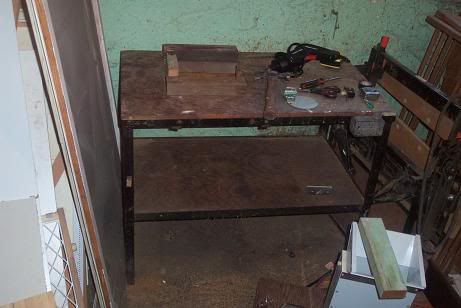
The two-by-four pieces are there to elevate the mill to the proper height to take advantage of my motor. Rather than a belt-drive method, I opted for direct drive. More on that later.
I built a little box of two-bys and a bit of plywood and mounted the mill directly on top, using the thumbscrews that came with the mill.
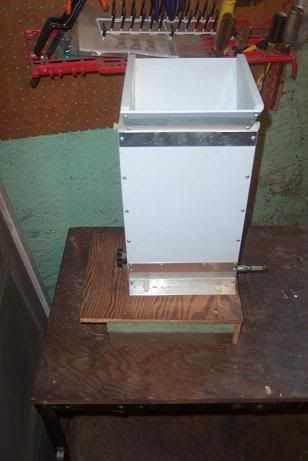
This fitting came with the mill, too. It’s intended for use with a hand-held drill, but with the help of a good friend of mine, we fitted a motor to it.
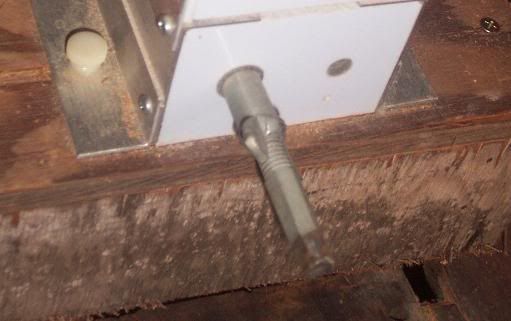
Here’s how the mill attaches to the motor. You can see how creative we got with the parts. Where all these bits and pieces originally came from, I couldn’t tell you.
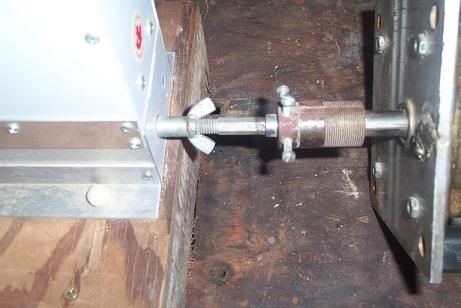
Next I mounted the 100 RPM motor to the table with 1” bolts. It’s situated so that it’s permanently attached to the fitting on the mill now. That’s a bonus, too, as in my old setup, the motor often jiggled loose, causing further delay.
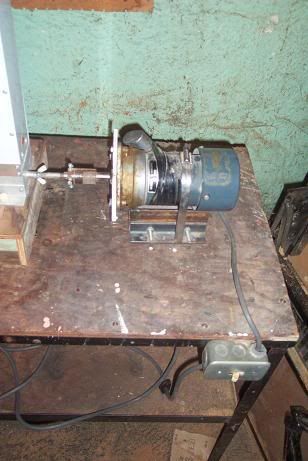
Then I attached the motor’s power cord to a switch mounted on the side of the table (re-used from the tablesaw and moved to a more convenient location). Another improvement from the in-line switch formerly used, which always gave me fears of electrocution.

The final task was figuring out where to put the darned thing. It couldn’t stay in my woodshop. I found a space in my brewing cellar, near where I keep my grains and my finished, cellaring beer, and voila! I am ready for brew day!
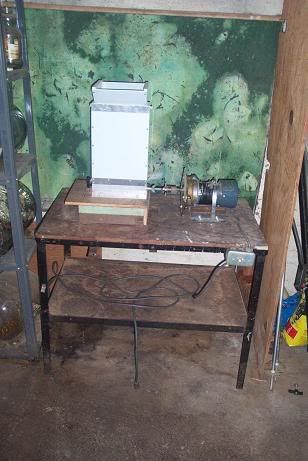
Sunday, November 26, 2006
Carlton Wine Tour
Yesterday’s wine-tasting adventures returned me once again to the Willamette Valley, and in particular, Yamhill County, home of some of Oregon’s premier pinot noirs.
We started at Ken Wright Cellars, an exclusive, high-end winemaker in Carlton, OR. Ken Wright’s pinots are in such high demand that they sell them as futures only ($220/six), and only at the winery. You can find them in restaurants, but not in wine stores. They offered barrel tastings of 2006 pinots from three vineyards: their own Savoya, another from McCrone Vineyards, and another from Paul Carter. They also offered a crisp, delicate 2005 Pinot Blanc – very enjoyable - and a less satisfying California-style Celilo Chardonnay, too buttery and oaky for my palate.
Of the three pinot noirs, Savoya was the most robust and fruity. It was very low in tannins and acidity and while it will be a good drinking wine in 2007-2008, I don’t think it would last much longer than that in the bottle. The McCrone had a little more tannin but still remained on the sweeter side. The Carter, at 24.7 Brix and 3.35 pH, achieved the best balance of the three. Complicating the tasting was that the McCrone and Carter had just begun malolactic fermentation, which masked some of the fruit flavor and aroma and gave it a spritziness on the tongue. I would not expect either of those issues to persist in the final product. All in all the Carter may be among the best pinots from the area in 2006.
Across the street, Ken Wright’s other winery, Tyrus Evans, poured a 2005 Claret and two 2005 Syrahs. The Claret, a blend of 55% Cabernet and 45% Merlot, fruity and had a hint of spiciness, but at $33 per bottle was unconvincing. The Umpqua Valley Syrah had a seriously funky off-aroma that reminded me of rotting fruit, to be charitable. However the Walla Walla Syrah at $30 was quite nice, well-structured with flavors of dark fruits and rather tannic, albeit a little over-extracted.
Just a long block away is Scott Paul, whose wines were anything but over-extracted. If anything they were a bit thin, particularly their 2005 Cuvee Martha Pirrie Pinot Noir. A delicate blackberry nose promises more than is delivered on the palate as this wine evaporates on the finish. The 2005 La Paulee Pinot Noir, being sold as futures, was fuller and rounder but still lacked structure and at $30 ($40 on its April 2007 release) is not price-competitive to comparable wines. The delicate, well-balanced 2005 Audrey Pinot Noir was the best of the three but at $40 ($55 in April) it was hard to justify. My guess is this resulted from the winery’s attempt to deal with the low sugar, high-acid yield of the 2005 crop, and they overcompensated. Scott Paul also tasted a 2004 Pommard from Domaine Leroyer-Girardin, earthier and more aromatic, but again the wine’s flavored disappeared from the taste buds without warning.
Our final stop of the day was at Solena Cellars. Solena featured ten wines, including four pinot noirs. Their 2004 Grand Cuvee, a blend of pinots from four vineyards, was surprisingly fruity and lush for such a value-priced wine ($25). The $35 2004 Shea was thin and acidic by comparison. The $45 Domaine Danielle Laurent was elegant and soft with complex fruit and solid oakiness but should have been priced at least $8-10 lower to compete with equivalent wines in the region. The 2004 Kudos Pinot Noir was unremarkable. My personal perennial Solena favorites, their Del Rio Syrah and Woolridge Creek Zinfandel, seemed thinner and less complex than usual, lacking some of the rich fruit and spiciness I recall from years past. It could also have been palate fatigue, as these were the last two wines I tried on the day. If not for the long drive and $10 tasting fee I might have to make a return trip to find out.
We started at Ken Wright Cellars, an exclusive, high-end winemaker in Carlton, OR. Ken Wright’s pinots are in such high demand that they sell them as futures only ($220/six), and only at the winery. You can find them in restaurants, but not in wine stores. They offered barrel tastings of 2006 pinots from three vineyards: their own Savoya, another from McCrone Vineyards, and another from Paul Carter. They also offered a crisp, delicate 2005 Pinot Blanc – very enjoyable - and a less satisfying California-style Celilo Chardonnay, too buttery and oaky for my palate.
Of the three pinot noirs, Savoya was the most robust and fruity. It was very low in tannins and acidity and while it will be a good drinking wine in 2007-2008, I don’t think it would last much longer than that in the bottle. The McCrone had a little more tannin but still remained on the sweeter side. The Carter, at 24.7 Brix and 3.35 pH, achieved the best balance of the three. Complicating the tasting was that the McCrone and Carter had just begun malolactic fermentation, which masked some of the fruit flavor and aroma and gave it a spritziness on the tongue. I would not expect either of those issues to persist in the final product. All in all the Carter may be among the best pinots from the area in 2006.
Across the street, Ken Wright’s other winery, Tyrus Evans, poured a 2005 Claret and two 2005 Syrahs. The Claret, a blend of 55% Cabernet and 45% Merlot, fruity and had a hint of spiciness, but at $33 per bottle was unconvincing. The Umpqua Valley Syrah had a seriously funky off-aroma that reminded me of rotting fruit, to be charitable. However the Walla Walla Syrah at $30 was quite nice, well-structured with flavors of dark fruits and rather tannic, albeit a little over-extracted.
Just a long block away is Scott Paul, whose wines were anything but over-extracted. If anything they were a bit thin, particularly their 2005 Cuvee Martha Pirrie Pinot Noir. A delicate blackberry nose promises more than is delivered on the palate as this wine evaporates on the finish. The 2005 La Paulee Pinot Noir, being sold as futures, was fuller and rounder but still lacked structure and at $30 ($40 on its April 2007 release) is not price-competitive to comparable wines. The delicate, well-balanced 2005 Audrey Pinot Noir was the best of the three but at $40 ($55 in April) it was hard to justify. My guess is this resulted from the winery’s attempt to deal with the low sugar, high-acid yield of the 2005 crop, and they overcompensated. Scott Paul also tasted a 2004 Pommard from Domaine Leroyer-Girardin, earthier and more aromatic, but again the wine’s flavored disappeared from the taste buds without warning.
Our final stop of the day was at Solena Cellars. Solena featured ten wines, including four pinot noirs. Their 2004 Grand Cuvee, a blend of pinots from four vineyards, was surprisingly fruity and lush for such a value-priced wine ($25). The $35 2004 Shea was thin and acidic by comparison. The $45 Domaine Danielle Laurent was elegant and soft with complex fruit and solid oakiness but should have been priced at least $8-10 lower to compete with equivalent wines in the region. The 2004 Kudos Pinot Noir was unremarkable. My personal perennial Solena favorites, their Del Rio Syrah and Woolridge Creek Zinfandel, seemed thinner and less complex than usual, lacking some of the rich fruit and spiciness I recall from years past. It could also have been palate fatigue, as these were the last two wines I tried on the day. If not for the long drive and $10 tasting fee I might have to make a return trip to find out.
Wednesday, November 22, 2006
Touring The John Smith Brewery in Tadcaster, Yorkshire, England
by The Trubadours, Gary Corbin and Laura Guimond
Another article in a series about the breweries, pubs and beers that we encountered in our May, 1996 trip to Britain and Ireland.
Our tour guide at Beamish and Crawford brewery in Cork, Ireland had given us the name of a friend at John Smith’s Brewery to look up in case we should happen to stop by. Needing no further excuse, we called Mr. Mark O’Shea from southern Scotland and he gamely offered to show us around a bit. Mark proved to be as friendly and hospitable as our Irish and Scottish brewery hosts were; a family man with young children at home, nevertheless Mark came in on his day off to provide a tour of one of England’s largest breweries.
From the tiny to the Titan
The Brewery
John Smith’s was founded in 1758 at what is now the site of neighboring Sam Smith’s brewery. The new site was built in 1884 when two feuding cousins split the company in two. After a complex series of mergers and buyouts, the first being when Courage bought it in 1972, John Smith’s became part of what is now the Courage/Scottish and Newcastle chain, Britain’s largest brewing giant. The 1884 brewhouse remained in use until 1984, when it was restored from original line drawings as a museum/touring brewery.
John Smith’s, a 7 day x 24 hour operation, brews 1.4 million imperial barrels per year. Its principal product is John Smith’s Bitter, but it produces all products in the Courage line. It packages its beer in kegs, casks, and cans; no bottling is performed at John Smith’s in Tadcaster. They do, however, keg beer for other Courage breweries, including Beamish & Crawford.
Smith’s recently sold its in-house malting operation, which still supplies most of its malt. The malt is made primarily from barley from surrounding Yorkshire, an area well known for its quality barley crop. Several different carefully segregated yeasts are used, and are recultured in-house every ten generations.
The Equipment
Mashing and lautering were done in the same vessel until 1948, when the brewery modernized. Currently there are four tanks, one each for the mash, sparge, boil, and whirlpool. Until tax laws changed four years ago, there was a fifth, “ganging” vessel, used to measure the wort and its gravity for taxation purposes. These tanks are used now for pre-fermentation storage as required.
The brewery is a mix of the old and traditional on the one hand and the new and modern on the other. Racking between the 42 conical fermentation and storage tanks is done by a pump, but the brewer must manually connect flexible hoses between tanks. Temperature of the vessels is controlled from a central computer, which monitors thermostats inside glycol cooling jackets on each vessel.
The Process
The two-step mash (68ºC, then 71ºC) takes only an hour, after which it is pumped to the lauter tun for a three hour, 15 minute sparge at 77ºC. This produces a concentrated wort of about 1.058 SG, which is then pumped to the kettle. After boiling, the brew is pumped to one of two 8’-long counterflow chillers, which can cool 200 barrels per hour to 18ºC.
Fermentation
Usually, two 750-1000 hectoliter batches of each brew are combined before fermentation. From 1913 to 1975, they used open Yorkshire slate fermenters; currently the beer is closed-fermented in one of 42 conical tanks. Fermentation is quick – about 86 hours – after which it is chilled to 5ºC for about 24 hours, then to -1ºC to clarify it. Isinglass finings are added at this time unless the ale will be cask-conditioned. The yeast is filtered out after fermentation and used to produce new slants for propagation or is sold to make marmite (used as a toast spread).
In sum, the beer spends 6-8 hours in the brewhouse, a week in fermentation tanks, and 3 or 7 days in maturation tanks (for draft and canned beer, respectively), then goes on to the packaging line. Smith’s stopped cask ale production in the 1970’s but rebuilt is cask packaging line in the 1980’s with the resurgence of popularity of real ale.
Packaging
The brew from any given batch may be blended with other batches, depending upon the results of post-fermentation analysis, either at racking or packaging time. The heavy beer is diluted at packaging time from 5½% alcohol to 3½% (draft) or 4% (cans). Non-cask ale is flash pasteurized immediately before the keg or can is filled. Some, such as Beamish and John Smith Bitter, have NO2 injected. Unlike in the south of England, all ales in the north and in Scotland have a thick, creamy head – even the cask ales, due to a difference in the dispensing mechanism.
The kegging operation is impressive. There are fourteen kegging lanes, and typically they are all in operation. Each lane has four heads: the first empties any sediment from the keg; the second and third clean and disinfect it, and fill it with steam; and the fourth fills it with beer. Random samples of kegs are weighed and recorded, and the records are inspected by the government. That ensures the pub owner – and therefore the customer – will have a full keg when the time comes to consume it.
Consumption
Courage/S&N beers are common throughout Britain and Ireland, and for that matter in Portland. You won’t see anything called John Smith’s Bitter here – it seems to be an England-only phenomenon – but there are several examples around. An easy one to find is the export namesake John Courage at Produce Row. Newcastle Brown Ale is an exemplar of the style and is available in bottles in many stores. CS&N labels you’ll often find on the shelves at Burlingame Market include: Younger (Best Bitter, IPA), McEwan’s (Scottish Ale), and Theakston (Old Peculier).
The ones I tried on our trip – and took notes on! – were:
Theakston Best Bitter – The Traveller’s Rest, Witton-Gilbert, England – Cask ale with long-lasting medium head. Gold color, hoppy aroma, not very estery or citrusy. Thin bodied, medium bitterness, low sweetness, low to medium maltiness, low but noticeable hop flavor, slightly hoppy finish.
Younger’s IPA (nitro) – Cutter’s Wharf, Belfast, Northern Ireland – Creamy nitro head, deep gold to pale red in color, good clarity after settling the required three minutes. Citrusy/hoppy aroma, thin to medium body, moderate maltiness and bitterness, traces of caramel in the flavor. Sweet finish with a citrusy hop presence.
Younger’s Tartan Special – Tigh-an-Truish, Seil Island, Scotland – Cask ale with deep copper color, low but long-lasting head. Very little detectable aroma. Bitter and hoppy up front, moderately low body, malty/bready flavor but low in sweetness, some caramel. Dry, hoppy finish.
McEwan’s Export Ale – Himalaya’s, Edinburgh, Scotland – Large foamy head, fell out almost completely by mid-glass. Malty sweet aroma, some hop/citrus in aroma. Medium bodied, malty, sweet, moderately low bitterness, sweet finish.
Conclusion
Our personal guided tour of the John Smith brewery was a memorable experience, not only for Mark O’Shea’s generosity with his time, attention, and information, but also because it was a glimpse inside one of the “big boys” in the U.K.
The differences in scale clearly lead brewers to different decisions about process, capital investment, and packaging. Smith’s ability to invest in alternative packaging methods rests in their greater capital reserves and market penetration than, say, Caledonian. Caledonian’s size leads to a boutique image and premium product pricing regardless. Thus, consistency measures such as blending and cost-cutting measures such as heavy wort boils don’t play a role, while they can make a significant difference in a large brewery like John Smith’s. Moreover, the engineering and research that produce the brewery, the product, and the packaging plant at Smith’s are truly impressive and are envied by smaller breweries.
One can only hope that the market dominance of Courage/S&N in Britain does not obliterate the long, fine tradition of local brewing styles and the diversity of products in the breweries they overtake. While both are enjoyable, the malty richness and thick creamy heads of beers in Scotland and Northern England are a world apart from the thinner, less carbonated, more bitter styles found near London. If justice prevails in brewing, the next Brew Crew member to visit the John Smith’s Brewery will find them brewing John Smith’s Bitter the way they do today.
Tuesday, November 21, 2006
Treating Portland Water With Style
Most homebrewers understand and pay proper attention to the contributions that malt, hops, and yeast each make to the flavor and character of their beer. Many, however, overlook the role of their brew's most plentiful ingredient: water. But the pH, mineral content, and hardness of brewing water can significantly affect the all-grain brewer's ability to extract fermentable sugars from the grain, and hence, the brewer's ability to obtain the desired flavor profile for a particular style of beer.
This article takes a practical look at the mineral treatment of Portland (Bull Run Reservoir) water for brewing purposes, and in particular, for brewing different styles of beer.
Many beer styles are associated with particular cities -- for instance, Pale Ales with Burton-upon-Trent, England; Stouts with Dublin, Ireland; and so on. Part of the reason that these beers were successful in their respective cities, and became so closely associated with these cities, is that the character of the cities' water is particularly well-suited to the characteristics of the beer style. For example, the hard water of Burton-upon-Trent is high in sulfates, which accentuates hop bitterness and flavor. It stands to reason, then, that if we can treat Portland's water to match Burton-upon-Trent's water, then we should be able to produce a more authentic IPA.
Fortunately, the water we get in Portland is soft and low in most minerals. Thus, all we need to do is add the appropriate salts in the right proportion to emulate the target city's water.
The mineral content of Portland's water is summarized in Table I (Source: Bureau of Water Works). Similar analyses are readily available from the water utility in most cities. Table II summarizes the impact of adding 1 gram of a given salt to 1 gallon of water.
Given the water characteristics of a given city, we can now apply these salts to Portland's water to approximate the water characteristics of that city. Table III summarizes the water characteristics of several cities important in the brewing world, and notes the style of beer associated with each city. For each city in the table, the first line summarizes the characteristics of the water actually in that city; the second line is Portland water, adjusted with brewing salts. The amount of salts added per gallon is given in Table IV.
Water treatment is another tool for the all-grain brewer to use to control the yield of the mash and flavor of the finished beer. The different flavor profiles associated with each style depend in part on the pH, mineral content, and hardness of the brewing water. However, your mash will tolerate significant deviations in mineral content from those found in the city of a particular style's origin, and in fact avoiding the extremes of some cities' water is probably a good idea. The minimalist approach is best; start on the low side, experiment, take good notes, record your results, and adjust accordingly the next time.
This article takes a practical look at the mineral treatment of Portland (Bull Run Reservoir) water for brewing purposes, and in particular, for brewing different styles of beer.
Many beer styles are associated with particular cities -- for instance, Pale Ales with Burton-upon-Trent, England; Stouts with Dublin, Ireland; and so on. Part of the reason that these beers were successful in their respective cities, and became so closely associated with these cities, is that the character of the cities' water is particularly well-suited to the characteristics of the beer style. For example, the hard water of Burton-upon-Trent is high in sulfates, which accentuates hop bitterness and flavor. It stands to reason, then, that if we can treat Portland's water to match Burton-upon-Trent's water, then we should be able to produce a more authentic IPA.
Fortunately, the water we get in Portland is soft and low in most minerals. Thus, all we need to do is add the appropriate salts in the right proportion to emulate the target city's water.
The mineral content of Portland's water is summarized in Table I (Source: Bureau of Water Works). Similar analyses are readily available from the water utility in most cities. Table II summarizes the impact of adding 1 gram of a given salt to 1 gallon of water.
| Table I: Portland Water | ||||||
| Calcium | Magnesium | Sodium | Chloride | Sulfates | Carbonates | Hardness |
| 1.8 | 0.75 | 1.6 | 10 | 0.5 | 7.5 | 8.6 |
| Table II: Effect (+ppm) of adding 1 gram of salt per gallon of water | |||||||
| Salt | Calcium | Magnesium | Sodium | Chloride | Sulfates | Hardness | |
| Baking soda | 75 | 190 | 190 | ||||
| Calcium chloride | 72 | 127 | 0 | ||||
| Chalk | 106 | 159 | 159 | ||||
| Epsom salts | 26 | 103 | 26 | ||||
| Gypsum | 62 | 148 | 0 | ||||
| Table salt | 104 | 160 | 0 | ||||
Given the water characteristics of a given city, we can now apply these salts to Portland's water to approximate the water characteristics of that city. Table III summarizes the water characteristics of several cities important in the brewing world, and notes the style of beer associated with each city. For each city in the table, the first line summarizes the characteristics of the water actually in that city; the second line is Portland water, adjusted with brewing salts. The amount of salts added per gallon is given in Table IV.
| Table III: Beer Styles and Water Characteristics of Various Brewing Cities | ||||||||
| City | Calcium | Magnesium | Sodium | Chloride | Sulfates | Carbonates | Hardness | |
| Burton-on-Trent | 295 | 45 | 55 | 25 | 725 | 300 | 850 | |
| Pale Ales | 294 | 45 | 54 | 10 | 620 | 300 | 345 | |
| Dortmund | 250 | 25 | 70 | 100 | 280 | 550 | 750 | |
| Malty, bitter ambers | 250 | 24 | 77 | 99 | 212 | 420 | 445 | |
| Dublin | 115 | 4 | 12 | 19 | 55 | 200 | 300 | |
| Dry stouts | 116 | 1 | 17 | 10 | 45 | 189 | 190 | |
| Edinburgh | 120 | 25 | 55 | 20 | 140 | 225 | 350 | |
| Malty ales, low bitterness | 120 | 24 | 50 | 50 | 123 | 224 | 248 | |
| London | 50 | 20 | 100 | 60 | 80 | 160 | 400 | |
| Porter | 50 | 14 | 62 | 74 | 82 | 160 | 174 | |
| Munich | 75 | 20 | 10 | 2 | 10 | 200 | 250 | |
| Dark malty lagers | 76 | 1 | 2 | 10 | 1 | 119 | 120 | |
| Pilzen | 7 | 2 | 2 | 5 | 5 | 15 | 30 | |
| Light lagers | 2 | 1 | 2 | 10 | 1 | 8 | 9 | |
| Vienna | 200 | 60 | 8 | 12 | 125 | 120 | 750 | |
Oktoberfest | 192 | 1 | 2 | 10 | 126 | 214 | 215 | |
Subscribe to:
Posts (Atom)